

Shanghai Petrochemical Environmental Protection & Water Department: Case Study on Concrete Anti-Corrosion and Repair Technology for Acrylic Wastewater Contact Oxidation Tanks
1. Project Overview
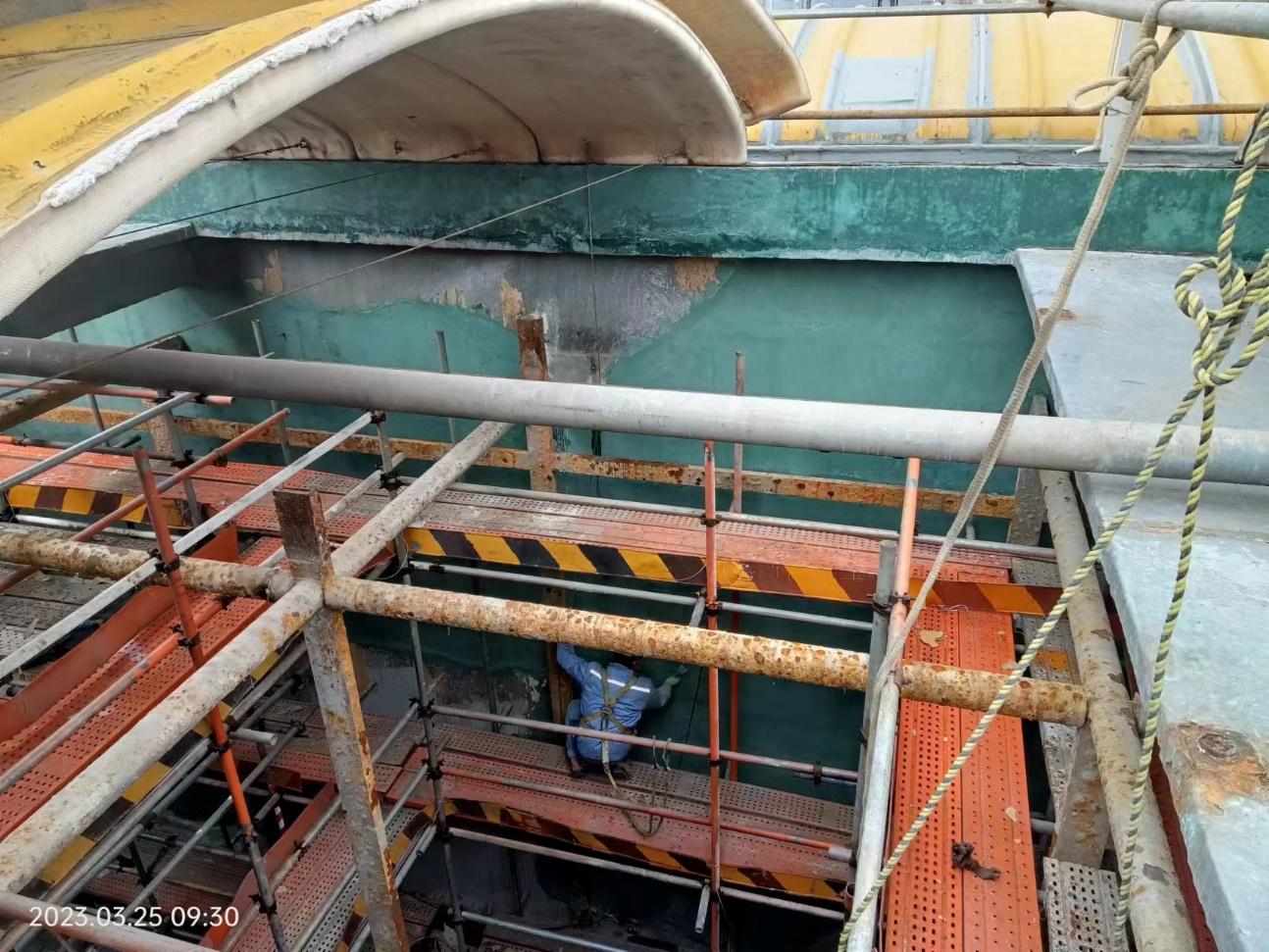
Construction Date: March 2023
Project Name: Acrylic Wastewater Treatment System Rehabilitation Project, Shanghai Petrochemical Environmental Protection & Water Department.
Work Area: Contact Oxidation Tank (Core Biochemical Treatment Zone).
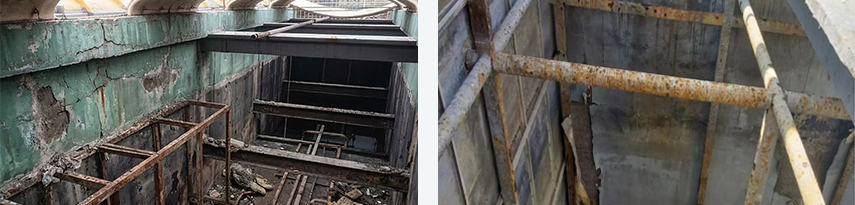
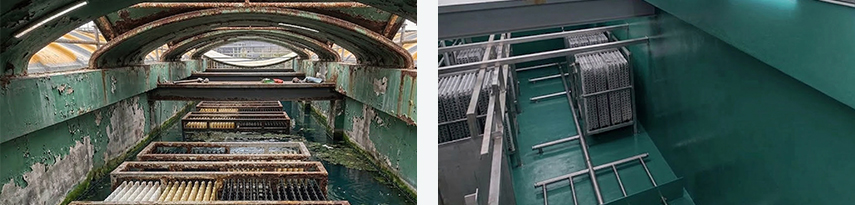
Repair Objective: To resolve issues of Fiber Reinforced Plastic (FRP) delamination and concrete cracking caused by the composite corrosion of Hydrogen Sulfide (H2S) and Acrylonitrile; to restore structural durability and anti-seepage functionality.
2. Operational Challenges
Complex Media: Acrylic wastewater contains nitrogenous compounds and organic residues that exhibit high permeability and corrosivity toward concrete.
Construction Environment: Narrow workspace requiring extremely high safety standards for personnel protection.
Humidity and Carbonization: High humidity and CO2 concentrations in the oxidation tank lead to rapid concrete carbonation, resulting in rebar corrosion and expansion.
3. Composite Protection System Design
A three-tier protection system was implemented: "Penetrating Sealing + Structural Leveling + Thick-Film Anti-Corrosion."
Step 1: Substrate Reconstruction and Crack Treatment
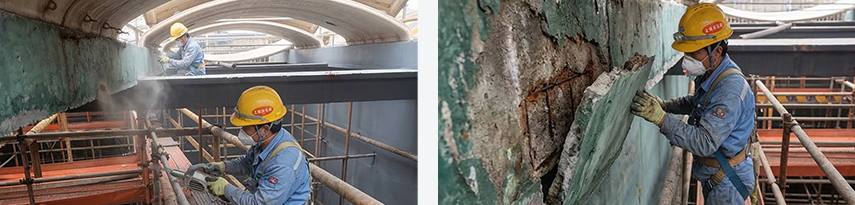
Deep Cleaning: Mechanical removal of all loose FRP and corroded/pulverized concrete until the solid aggregate is exposed.
Structural Repair: Application of high-strength polymer reinforcement mortar to repair wall cracks and restore the overall structural strength of the tank.
Moisture Control: Substrate moisture content controlled below 20% (optimized for moisture-curing materials).
Step 2: Penetrating Anti-Carbonation Primer (50μm)
Function: Utilizes strong capillary action to seal concrete micropores, locking in alkaline substances and preventing acidic materials generated by H2S from damaging the interface from within.
Step 3: Anti-Carbonation Intermediate Leveling Layer
Core Function: Fills honeycombs and pores post-repair, acting as a "structural reinforcement layer" to block the infiltration paths of CO2 and acidic gases.
Step 4: High Cross-Linked Heavy-Duty Anti-Corrosion Topcoat (1000μm)
Material Choice: Special Isophthalic or Novolac Epoxy Vinyl Ester Resin.
Function: Specifically engineered to resist the swelling effects of Acrylonitrile. The 1mm ultra-thick membrane provides high cross-link density, forming a hard chemical barrier that completely blocks erosion from strong acids, alkalis, and organic solvents.
4. Technical Summary and Value
Overcoming Swelling Issues: Successfully solved the persistent problem of FRP delamination caused by Acrylonitrile, ensuring superior adhesion between the anti-corrosion layer and the concrete.
Structural Reinforcement: Repaired severely cracked walls, extending the expected maintenance-free operational cycle by 15–20 years in highly corrosive environments.
Zero-Leakage Safety Assurance: Effectively prevented the seepage of H2S and wastewater, eliminating soil contamination risks and ensuring environmental compliance.