
1. On-site Challenges: The Double Impact of Acid Corrosion and Carbonization
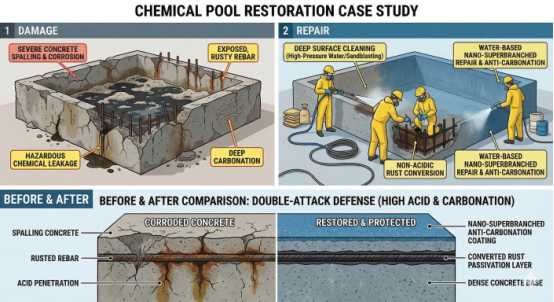
The raw material storage tanks of this fine chemical enterprise have long been filled with mixed acids (sulfuric and nitric acid), creating an extremely harsh environment.
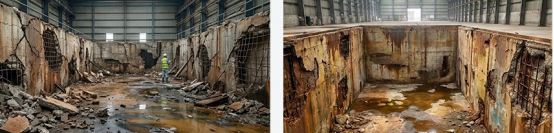
Severe Acid Corrosion: The original anti-corrosion layer failed, allowing acid to penetrate deep into the concrete. This caused the concrete matrix to loosen, turn "crumbly," and lose its load-bearing capacity.
Comprehensive Reinforcement Corrosion: Acid contact with steel bars led to severe oxidation and volumetric expansion. This not only weakened structural strength but also caused the external concrete to crack.
Accelerated Concrete Carbonization: Under the combined action of acidic atmosphere and moisture, the alkalinity of the concrete dropped rapidly (carbonization). The protective layer failed completely, creating a vicious cycle.
Traditional repair methods usually require extensive demolition and re-pouring of concrete, which is time-consuming, costly, and often creates new weak points at the interface between old and new concrete.
2. Core Process: Integration of Cutting-edge Material Technologies
To address these issues, this repair utilizes an innovative combination of "Non-Acidic Rust Conversion + Aqueous Nano-Hyperbranched Anti-Carbonization" technology, aiming to treat both the symptoms and the root causes.
Core Technology I: Non-Acidic Rust Conversion (For Steel Reinforcement)
Core Technology II: Aqueous Nano-Hyperbranched Anti-Carbonization Repair Material (For Concrete Matrix) The aqueous nano-hyperbranched material utilizes its "multi-branched" reactive activity to grip loose concrete particles like a "miniature steel mesh," performing "secondary bone formation." This nano-scale filling combines perfectly with the steel reinforcement layer after non-acidic rust conversion, restoring the bond strength (anchorage) between the steel and concrete.
3. Construction Process: Precision Operations
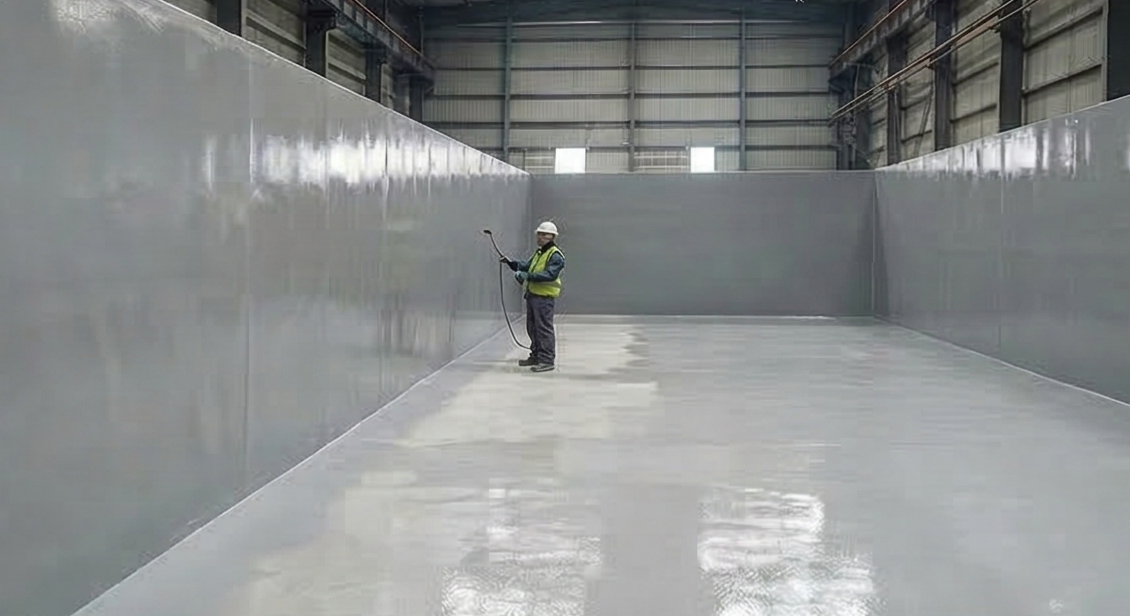
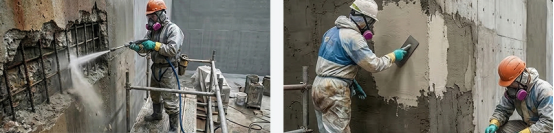
Deep Substrate Cleaning: A combination of high-pressure water jetting and mechanical removal is used to clear all attachments, failed coatings, and loose concrete until a solid surface is exposed.
Non-Acidic Rust Conversion: Use wire brushes to clean floating rust from exposed steel bars. Spray or brush the non-acidic rust converter to ensure complete coverage. Allow it to react until the surface transforms into a dark brown, dense protective film.
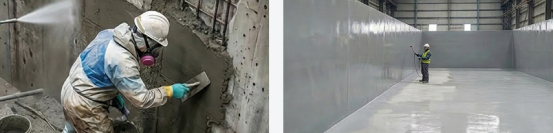
Matrix Nano-Enhancement and Leveling: Spray the aqueous nano-hyperbranched anti-carbonization impregnating liquid onto the cleaned concrete surface to ensure full penetration. Use repair mortar mixed with nano-enhancers for leveling and patching to restore the tank's geometric dimensions.
Overall Anti-Carbonization Sealing Layer: Apply the aqueous nano-hyperbranched anti-carbonization coating over the entire repaired surface to form a continuous, dense sealing layer for double protection.
4. Repair Effects and Technical Highlights
Durability: The dense molecular network formed by the hyperbranched structure extends the anti-corrosion lifespan from the traditional 3–5 years to over 20 years, significantly reducing shutdown frequency and life-cycle costs.
Reliability: Non-acidic rust conversion avoids the secondary damage caused by traditional acid washing, ensuring zero harm to the structure. This solves the industry pain point of "repairs making things worse."
Adaptability: With "high permeability and strong adhesion," it reacts even in humid or trace-acid environments. It is not picky about the construction environment, solving the challenge of maintaining chemical tanks under wet/acidic conditions and shortening the construction period by over 40%.
Environmental Friendliness: The "all-aqueous, acid-free system" ensures no harmful gases or acidic wastewater are discharged during construction, fully complying with high EHS (Environment, Health, Safety) standards.