

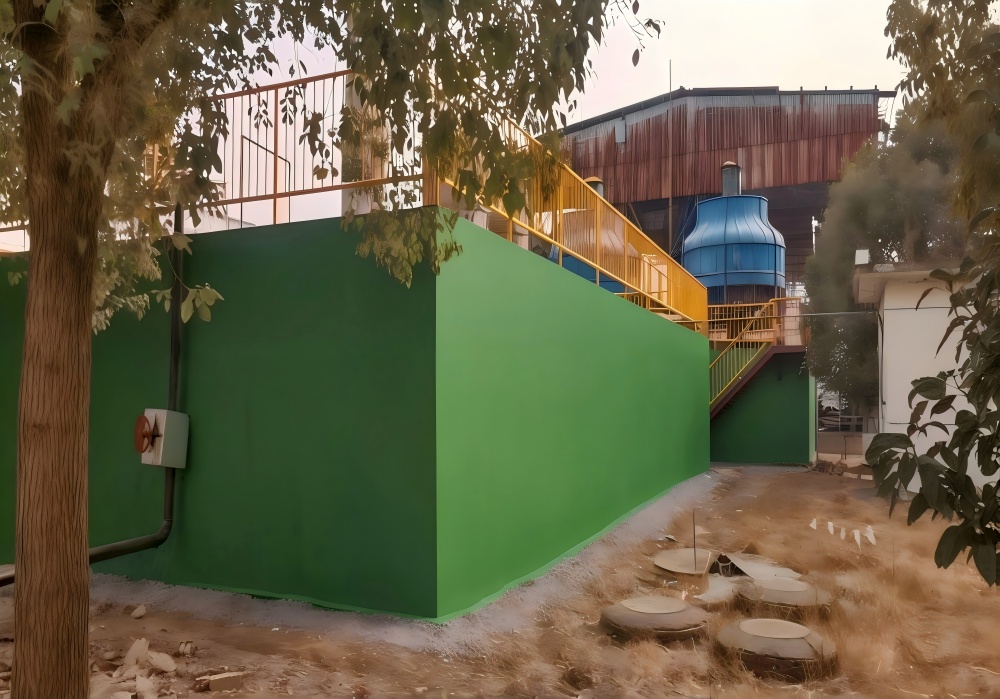
Case Introduction:
In industrial water treatment facilities, the corrosion resistance of concrete is no mere empty promise. In environments characterised by alternating acid and alkali conditions, extremely high concentrations of hydrogen sulphide, and prolonged operation in high humidity,
traditional coating systems prove to be virtually as flimsy as ‘cardboard’, resulting in high maintenance costs and short service life, which has long been a persistent headache for equipment management departments.
In 2021, the Shanghai Zhongfen Thermal Power Plant set out a clear requirement: it would no longer accept solutions where ‘a single coat lasts a year’, but instead sought to establish a concrete repair system capable of ‘long-term resistance to corrosion reactions,
with the inner structural layer able to self-seal micro-cracks’. This represented not only a head-to-head challenge for materials technology, but also a reconfiguration of industry standards.
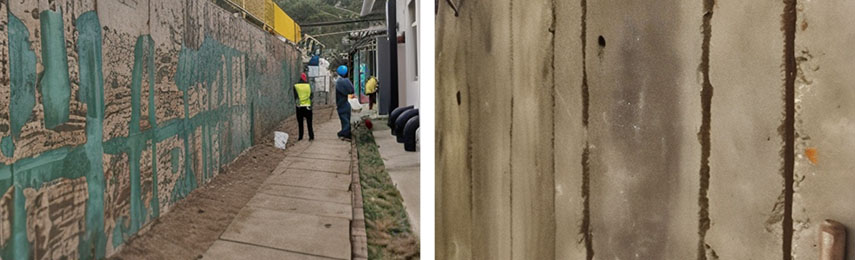
Identification of Key Issues (Conclusions from Initial Technical Assessment):
Corrosion Severity: Wide pH fluctuations within the tank (2.1–11.8), with hydrogen sulphide and chloride ion concentrations far exceeding municipal wastewater standards;
Failure Mechanisms of Traditional Materials: Previously applied polyurea and epoxy systems have both delaminated and blistered, with widespread crack propagation;
Extremely short maintenance window: The tank could only be taken out of service for 5 days to complete repairs and curing; large-scale demolition and reconstruction were not feasible.
Response Strategy (Rationale for Selecting the Keeper Materials System):
Keeper Materials provides a “reactive three-layer structural system”. Unlike materials that are merely “applied”, this system actively participates in the reconstruction of the concrete’s microstructure.
Base Penetrating Emulsion: Penetrates 5–8 mm deep, reacting with Ca²⁺ to form a stable calcium silicate framework, sealing capillary pores whilst enhancing water resistance and pH buffering capacity;
Middle Microcapsule Repair Matrix: Dynamically seals fine cracks of 0.1–0.2 mm, offering long-term temperature resistance and corrosion resistance;
Top Sealing Coating: Utilises a fluorosilicon-modified system, withstanding acid wash-down for over 96 hours without degradation.
All formulations are water-based and VOC-free, with no toxic side effects on subsequent drainage.
Products used:
KP-308 Rust-Conversion Varnish,
KP-065-1 Concrete Repair Penetrating Sealing Primer,
KP-065-2 Concrete Repair Intermediate Coat (two-component),
KP-065-3 Concrete Repair Acrylic Topcoat
Project Implementation and Performance:
Construction Period: 4.5 days, delivered ahead of schedule within the power plant’s operational maintenance window;
From Q4 2021 (commissioning) to Q3 2025, after nearly four years of continuous operation, monitoring data indicates:
No further sharp drops in the pH of the concrete surface
Coating adhesion strength of 2.1–2.3 MPa, far exceeding standard requirements
The maintenance cycle has been extended from the original major overhaul every 8–10 months to over 5 years of maintenance-free operation
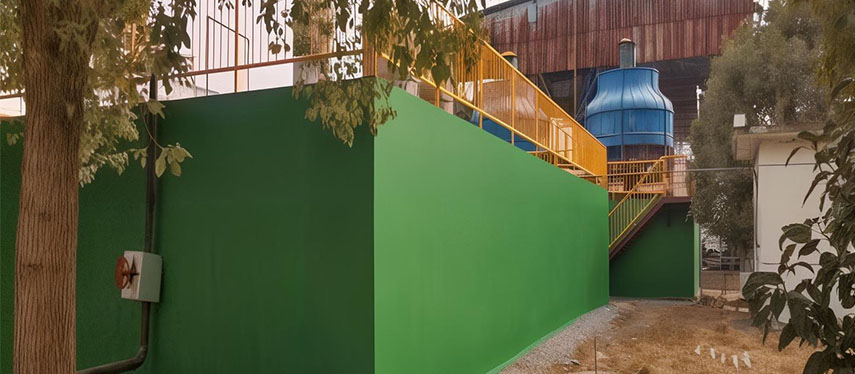
Project Observations and Industry Value:
Such extreme corrosion conditions provide the optimal field environment for testing the true performance of coating systems. Whilst most traditional systems still focus on merely ‘covering the surface’, Keeper Materials has successfully engineered the implementation of synergistic reactions between the material and the structure.
The value it delivers extends beyond mere “long service life”; it lies in advancing operational strategies from “reactive maintenance” to “predictable structural management”, providing truly scalable, low-environmental-risk structural solutions for scenarios such as thermal power plants, petrochemical plants, coking pits and hazardous waste ponds.
Wu Mingtao
Date: October 2021
Location: Shanghai, China