

I. The Challenge Facing National Trunk Lines: How to Achieve a Significant Improvement in Structural Durability within a ‘Zero-Tolerance’ System?
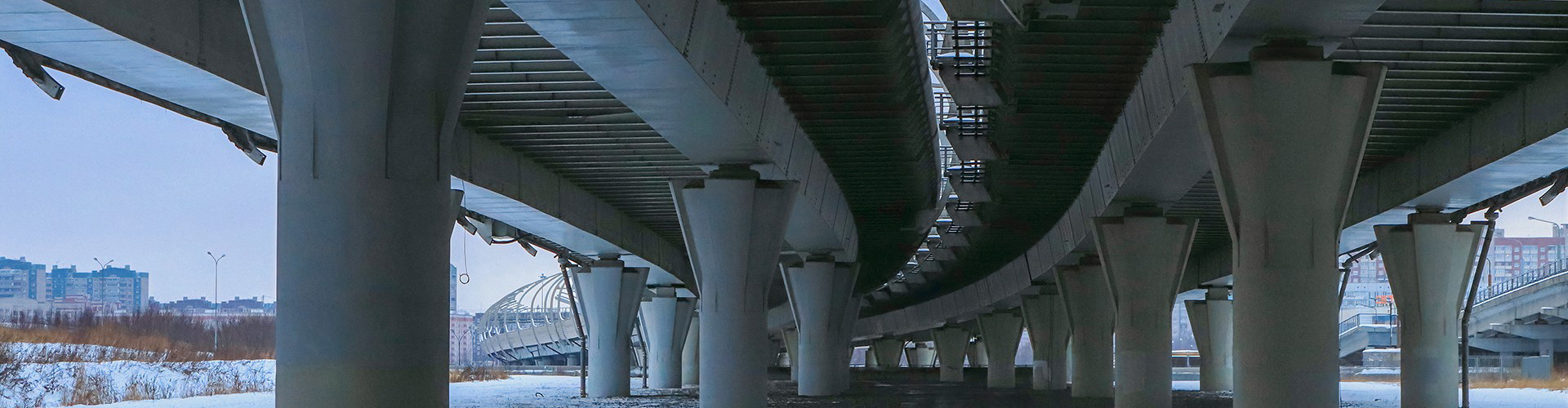
As China’s high-speed rail operations enter a phase of ‘heavy-asset, high-intensity service’, early signs of fatigue have begun to appear on some viaduct piers along the Shanghai–Hangzhou High-Speed Railway.
A systematic assessment has revealed that the following risk factors are accumulating:
The depth of carbonation is progressing faster than anticipated, compromising the protective function of the concrete cover;
The emergence of fine surface cracks on bridge piers, facilitating the ingress of rainwater and carbon dioxide into the structure;
A marked imbalance in interfacial stress between traditional coatings and C50 high-strength concrete.
Against the demanding backdrop of high-speed rail’s “continuous high-speed operation and zero structural failure”, this is no longer a localised flaw, but a warning signal for a full lifecycle safety strategy.
II. Out of 20 national bidders, the sole successful tenderer: Keeper Materials reshapes industry perceptions with systematic technology
The competent authority of the Chinese railway system promptly launched a specialised tender with unprecedented technical requirements:
The material must achieve stable adhesion and long-term durability on high-strength, high-humidity, inorganic interfaces;
The coating system must possess self-healing capabilities for cracks, carbonation resistance, environmental sustainability, and a mechanism for structural synergistic reaction;
The entire system must ensure a stable service life of over 15 years without disrupting the normal operational rhythm of high-speed rail.
Twenty companies from across the country submitted bids. Ultimately, only Keeper Materials’ nano-reactive concrete repair system achieved full marks in all three rounds of comprehensive evaluation—comprising laboratory testing, accelerated ageing simulation and on-site pilot sections—and was the sole successful bidder.
III. The Material Does Not Merely ‘Cover’ but Enables a ‘Microstructural Reconstruction’
The system pioneers a ‘three-dimensional synergistic repair mechanism’:
---
The entire system is 100% water-based, VOC-free and contains no heavy metal additives, meeting the environmental standards of the EU Green Building Materials Certification.
Products used:
KP-065-1 Cement Repair Penetrating Sealing Primer,
KP-065-2 Cement Repair Intermediate Coat (two-component),
KP-065-3 Cement Repair Acrylic Topcoat
IV. Results measured annually: 5 years of fault-free operation, officially verified as an “engineering-grade breakthrough”
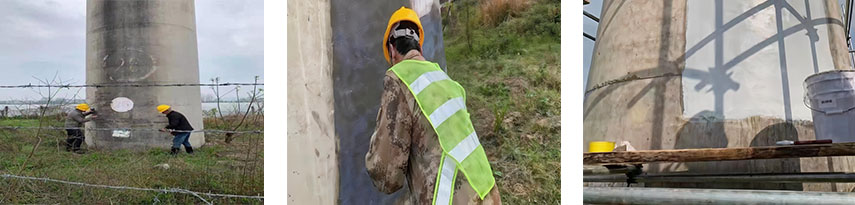
Construction on the pilot section of the project commenced in 2020; as of 2025, it has operated stably for over 5 years without any faults
The bridge pier surfaces remain intact, with no powdering or crack propagation
Multiple rounds of third-party inspection reports indicate: the carbonation process has been significantly delayed, and the material’s bond strength shows no noticeable decline from its initial state
Included by the railway system as a “Demonstration Project for Enhancing the Durability of Concrete Structures”
The repair system has been incorporated into the maintenance plans for bridges on multiple subsequent lines
V. Strategic Technical Value: From Localised Repairs to a National-Level Paradigm for the Full Life Cycle Management of Infrastructure
This project represents not merely a pier repair project, but the establishment of a landmark paradigm:
The first successful implementation of reversible repair for high-strength concrete under extreme service conditions
Establishing an integrated, synergistic protection model combining concrete, coating and structure
Driving the evolution of high-speed rail infrastructure maintenance philosophy from “damage repair” towards “risk prevention and service life extension”
Through this project, Keeper Materials has pioneered breakthroughs in China’s high-speed rail structural materials system in the areas of “high performance, environmental sustainability and intelligent responsiveness”, providing robust technical support for the transition of China’s bridge engineering from the “era of speed” to the “era of quality”.