
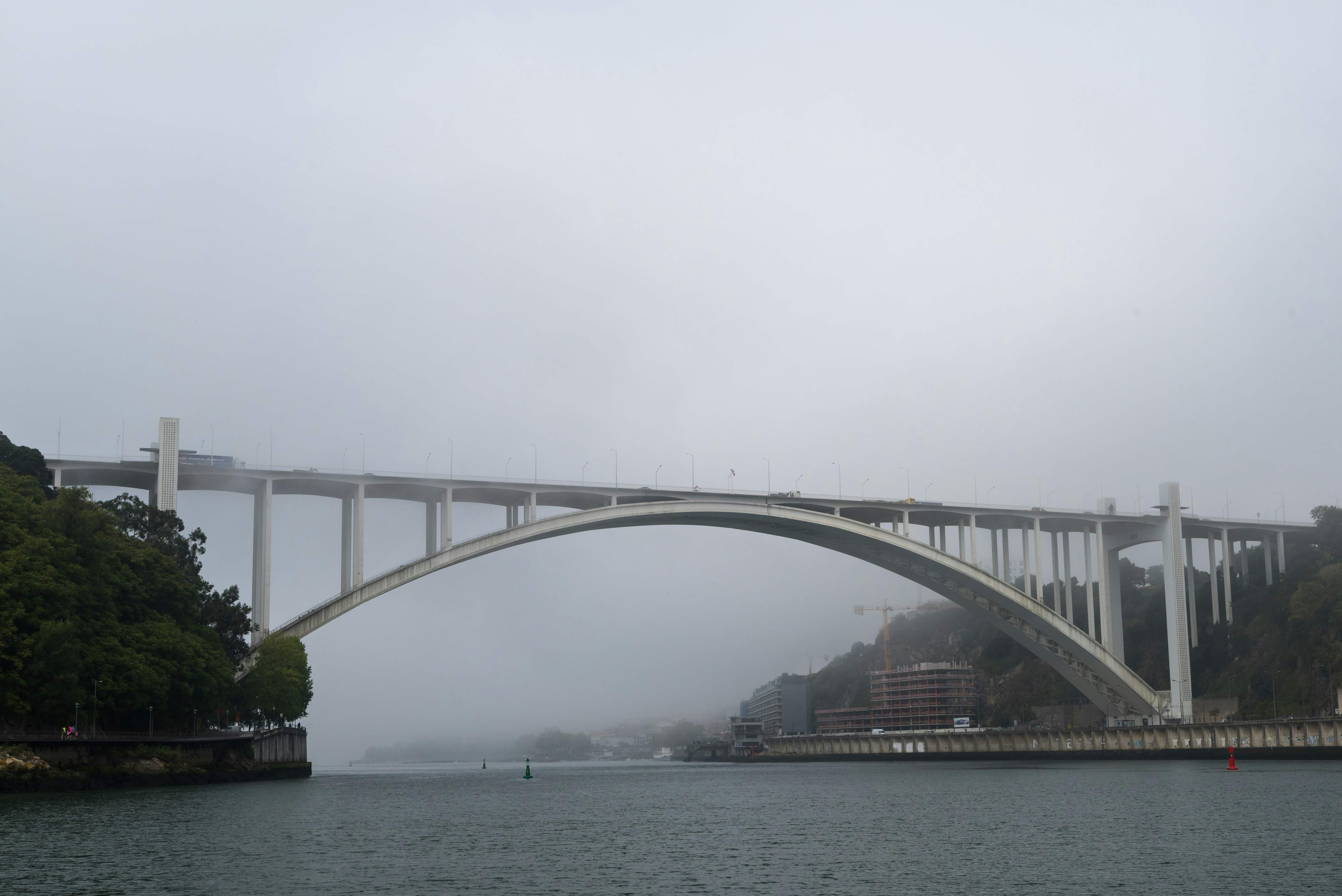
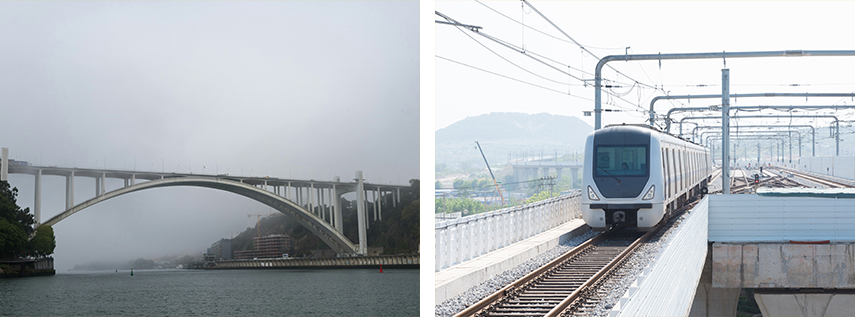
In modern cities, flyovers and rail transport form the key framework underpinning the transport system. Connecting urban centres with the suburbs and spanning rivers and interchanges, they are an indispensable part of the city’s infrastructure. However, from the moment they are built, these structures face dual challenges from both the natural environment and their operational conditions:
Climatic impacts: The scorching summer sun, heavy snowfall and bitter cold of winter, and torrential rain and freezing conditions in spring and autumn all accelerate the fatigue and ageing of concrete and steel reinforcement.
Environmental corrosion: The high-salt fog in coastal cities, acidic gases in industrial areas, and pollutants in rainwater all cause long-term erosion of concrete and steel reinforcement.
Loads and vibrations: The daily passage of vehicles and trains subjects the structures to repeated vibrations and impacts. In rail transport in particular, the stress concentrations caused by train braking and acceleration are highly likely to lead to the propagation of micro-cracks.
Over time, these issues can develop into safety hazards:
Cracks and spalling appear on concrete surfaces, exposing the reinforcing steel and causing it to rust.
Materials at expansion joints and bearing points deteriorate and fail, compromising the overall stability of the structure.
The surface coatings on steel structures become powdery, blistered and flake off, losing their protective function.
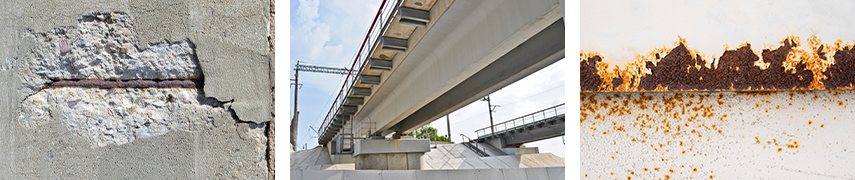
Traditional repair methods often rely on physical patching or single-layer anti-corrosion coatings; these approaches typically only provide short-term relief and fail to halt the ongoing deterioration of the internal structure, resulting in frequent repairs and persistently high costs.
Keeper Materials has developed a reactive cross-linking nano-repair material and a multi-layer protective coating system specifically for viaducts and rail transport infrastructure, capable of extending the structural lifespan at its source:
Nano-penetrating repair: With particle sizes far smaller than the capillaries in concrete, the material penetrates deep into the substrate to undergo a chemical reaction, forming a dense structure that restores the concrete’s original strength and protective capabilities.
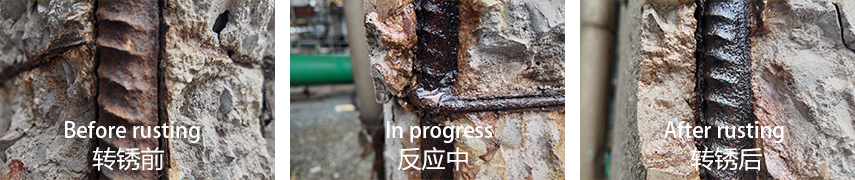
Multi-layer coating system: For steel structures, we employ cutting-edge rust conversion technology to transform unstable iron(III) oxide into iron(IV) oxide. A high-toughness intermediate coat (blocking the penetration of moisture and chemicals) and a highly weather-resistant topcoat (UV-resistant, salt-fog resistant, and anti-chalking) ensure a protective lifespan of over 20 years.
ity to extreme environments: Maintains toughness and adhesion even under severe cold conditions of -40°C, with resistance to over 200 freeze-thaw cycles; In high-salt-fog environments, corrosion resistance lasts for over 5,000 hours.
Practical case studies demonstrate that our materials have not only maintained stable performance for over 15 years on coastal viaducts exposed to high salt fog and intense UV radiation, but have also achieved long-term crack-free operation on rail transit lines in cold regions, reducing annual maintenance expenditure by over 70%.
For operators, this means:
Extending the service life of infrastructure and delaying major maintenance cycles
Reducing operational and maintenance costs, as well as minimising labour costs and losses due to service interruptions
Enhancing safety and preventing structural accidents
Improving visual appeal and maintaining the cleanliness and aesthetic appeal of urban infrastructure
Keeper Materials’ objective is to ensure that every viaduct and every section of rail infrastructure operates stably, safely and efficiently throughout its entire lifecycle, thereby ensuring that the city’s transport ‘arteries’ remain resilient in the face of the test of time and the environment.